
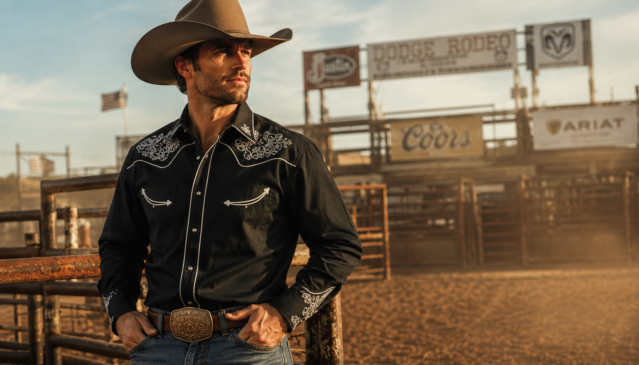
 Few pieces of clothing represent Western style as clearly as rodeo shirts for men. Recognizable by their structured yokes, snap closures, practical pockets, distinctive patterns, and comfortable construction, these shirts developed from clothing designed for people who needed freedom of movement and durability around ranches and rodeo arenas.
Over time, the rodeo shirt moved far beyond competition. Cowboys, ranch workers, country musicians, Western-film stars, and everyday wearers have all helped shape its identity. Today, a well-chosen rodeo shirt can work with bootcut jeans and cowboy boots at an arena, with everyday denim around town, or as part of a more contemporary Western outfit.
The challenge is that not every Western-looking shirt performs the same way. Fabric weight, sleeve length, fit, construction, snaps, and intended use can make a noticeable difference in comfort. This guide looks at the history of the rodeo shirt, explains the details worth paying attention to, compares common fabrics and styles, and shows how to choose a shirt that fits both your body and the way you plan to wear it.
The History of Rodeo Shirts
The history of the rodeo shirt is closely connected to practical ranch clothing. Long before Western fashion became a mainstream style category, ranch workers needed shirts that provided coverage, allowed movement, and could withstand demanding everyday use.
As organized rodeo developed, clothing also became part of a competitor’s visual identity. Practical shirts gradually gained more recognizable Western characteristics, including shaped yokes, decorative stitching, contrasting details, embroidery, and snap closures.
From Ranch Workwear to Rodeo Style
Early Western clothing prioritized function. Long sleeves provided coverage, sturdy fabrics handled repeated wear, and comfortable cuts allowed riders to move their arms and shoulders.
Rodeo brought another dimension: presentation.
Competitors were performing in front of crowds, so shirts could be practical while also looking distinctive. Brighter colors, contrasting yokes, decorative embroidery, piping, and more elaborate patterns helped transform functional ranch clothing into recognizable rodeo apparel.
Hollywood and Country Music Influence
Western films helped spread cowboy imagery far beyond ranching communities. Actors appearing in decorated Western shirts, hats, boots, and denim made the look recognizable to audiences who had never attended a rodeo.
Country and Western musicians reinforced that influence. Stage clothing often took traditional cowboy details and made them more expressive through embroidery, contrasting colors, decorative snaps, and bold patterns.
That connection between ranch practicality, rodeo presentation, film, and music explains why the rodeo shirt remains relevant today.
What Makes a Shirt a “Rodeo Shirt”?
There is no single detail that defines every rodeo shirt. Instead, several design characteristics work together to create the familiar Western appearance.
Snap Closures
Snap-front shirts are strongly associated with Western clothing. Compared with conventional buttons, snaps create a distinctive appearance while also being quick to open.
Pearl-style snaps are especially recognizable, although modern designs can use metallic, matte, colored, or other decorative finishes.
Western Yokes
The yoke is one of the easiest details to identify. Look across the shoulders and upper chest or back of a Western shirt and you’ll often see shaped panels with pointed, curved, or angular lines.
Yokes can be subtle and made from the same fabric as the shirt, or emphasized through contrasting colors, piping, embroidery, or decorative stitching.
Western Chest Pockets
Many rodeo shirts for men feature one or two chest pockets. Pointed flap pockets complement the angular lines of the yoke and help create the traditional cowboy silhouette.
Embroidery and Piping
Competition and dressier Western shirts can use embroidery, piping, contrast stitching, or decorative panels to create a stronger visual statement.
Everyday shirts are often simpler, allowing the plaid, print, color, or yoke construction to provide most of the Western character.
Freedom of Movement
Appearance matters, but so does mobility. A shirt intended for active wear should allow comfortable movement through the shoulders, back, and arms.
A shirt that looks perfect while standing still but pulls tightly when you reach forward isn’t an ideal fit for active use.
Fabrics Used in Rodeo Shirts
Fabric affects almost everything: comfort, breathability, durability, appearance, drape, and how easily the shirt can be layered.
Cotton and Cotton Blends
Cotton is popular because it feels familiar and breathable. Cotton-blend fabrics can combine that comfortable feel with characteristics such as easier care, improved shape retention, or added durability depending on the blend.
For everyday Western wear, a quality cotton-blend shirt can be particularly practical because it works across many occasions.
Performance Fabrics
Competitive riders may prioritize performance characteristics.
Modern technical fabrics can be designed to dry quickly, manage moisture, stretch more easily, or feel lighter during hot conditions. These features can be particularly useful for long outdoor events.
When choosing performance clothing, check the actual fabric specifications rather than assuming every lightweight shirt offers moisture management.
Flannel and Heavier Fabrics
Cool-weather rodeos call for different priorities.
Flannel and heavier woven fabrics provide more warmth and work naturally with rugged Western styling. They can be layered over an undershirt or beneath a vest or jacket when temperatures drop.
The trade-off is heat. A heavy shirt that feels comfortable during an autumn evening may be uncomfortable at a summer outdoor event.
Types of Rodeo Shirts
Understanding the major categories makes shopping considerably easier.
1. Pearl Snap Classics
The pearl snap is arguably the most recognizable everyday Western shirt.
A classic version usually combines snap closures with a Western yoke, long sleeves, chest pockets, and a straightforward plaid, check, stripe, print, or solid color.
These shirts offer excellent versatility because they can transition easily from ranch-inspired outfits to casual everyday clothing.
2. Embroidered and Rhinestone Competition Styles
When visibility matters, decoration becomes more prominent.
Embroidery can highlight the chest, shoulders, back, or cuffs, while rhinestone detailing can create additional impact under arena or stage lighting.
The key is balance. If the shirt is heavily decorated, simpler jeans, boots, and accessories usually allow it to remain the focal point.
3. Vented and Performance Rodeo Shirts
A vented rodeo shirt prioritizes airflow and mobility.
Depending on its construction, it may feature lightweight fabric, strategically positioned ventilation, quick-drying materials, or added stretch. These shirts are especially useful when heat and physical activity are major considerations.
4. Plaid and Solid Everyday Styles
Not every rodeo-inspired shirt needs to look like competition clothing.
Plaid Western shirts provide an easy connection to traditional ranch style, while solid colors create a cleaner appearance. Both work well for people who want Western character without excessive decoration.
How to Choose the Right Fit
Fit is one of the most important considerations when buying rodeo shirts for men.
The ideal shirt should look structured without restricting movement.
Regular Fit
A regular fit generally provides more room through the chest and torso. It’s a versatile choice for everyday wear and can accommodate a lightweight undershirt.
Fitted or Slimmer Silhouettes
A closer fit creates a cleaner outline and can work well for dressier Western outfits. However, avoid sizing down simply to achieve a fitted appearance.
If the fabric pulls across the chest or shoulders, the shirt is probably too small.
Tall Sizing
Taller men should pay particular attention to body and sleeve length. A shirt may fit correctly across the chest but still be too short through the torso or arms.
This becomes especially important when the shirt is tucked in.
Check the Shoulder Fit
The shoulder seam should sit naturally around your shoulder rather than pulling noticeably inward or hanging excessively low.
Then test movement. Reach forward, raise your arms, and bend your elbows. You should be able to move without significant pulling across the back.
Get the Sleeve Length Right
For a long-sleeve shirt, the cuff should reach the wrist comfortably when your arms are relaxed.
Remember that riding and other active movements can cause sleeves to pull upward, so a sleeve that already looks short while standing may become even more noticeable in motion.
Leave Room for Layering
If you’ll regularly wear a T-shirt or base layer underneath, account for it when selecting your size.
For winter wear, it’s often better to put heavier layers over the Western shirt rather than buying the shirt excessively large.
Styling Rodeo Shirts for Different Occasions
One reason Western shirts have lasted so long is their versatility. You don’t need to be competing in an arena to wear one.
Competition Day
For competition, function comes first.
Choose a shirt that allows unrestricted movement and works with the expected weather conditions. Pair it with appropriate denim, boots, and required riding equipment.
If the shirt has strong embroidery, contrasting panels, or other decorative details, keep accessories controlled so the outfit doesn’t become visually overwhelming.
Casual Ranch and Everyday Wear
For everyday clothing, simplicity works extremely well.
Try:
- Plaid pearl snap + straight-leg jeans + boots
- Solid Western shirt + dark denim + leather belt
- Snap shirt worn open + plain T-shirt + jeans
- Rolled sleeves + relaxed denim for warmer weather
These combinations keep the Western identity without making the outfit feel overly styled.
Western Events and Festivals
Concerts, festivals, fairs, and Western-themed events provide more room to experiment.
A patterned shirt can be paired with faded denim and boots, while a solid shirt gives you more freedom to add a statement belt, hat, or wild rag.
For shoppers looking for wearable Western styles rather than one-event clothing, The Cowboy Legend offers shirts that can transition between casual Western outfits and event styling.
Current Trends in Rodeo Shirts for 2026
Western fashion in 2026 continues to mix heritage details with modern styling rather than abandoning traditional design.
Vintage and Retro Influences
Vintage-inspired plaid, faded colors, old-school yokes, pearl snaps, embroidery, and heritage-looking fabrics fit naturally into the broader interest in retro Western fashion.
The difference is styling. Instead of recreating a historical cowboy outfit exactly, today’s wearer might combine a vintage-looking shirt with contemporary denim or simpler accessories.
Performance Meets Traditional Design
Technical construction and Western aesthetics are increasingly compatible.
A shirt can retain recognizable cowboy details while incorporating lightweight or movement-friendly materials. This makes it easier for consumers to choose according to actual use rather than sacrificing style for performance.
Greater Attention to Materials and Manufacturing
Shoppers are also paying closer attention to fabric composition, construction quality, durability, manufacturing origin, and how often they’ll realistically wear a garment.
That makes product descriptions and material specifications increasingly important. When browsing The Cowboy Legend or another Western retailer, check the individual product details rather than choosing only by appearance.
Common Mistakes Men Make When Wearing Rodeo Shirts
Even a great shirt can look wrong when the fit or styling doesn’t work.
Wearing the Shirt Too Tight
A Western shirt should follow your shape without restricting it.
If you see strong pulling around the snaps, chest, shoulders, or upper back, try a different size or cut.
Going Too Oversized
The opposite can also cause problems. Excess fabric around the waist, shoulders, and sleeves can hide the structured lines that make Western shirts distinctive.
Relaxed is fine. Poorly fitted is different.
Over-Accessorizing
A Western outfit doesn’t require every cowboy-associated accessory at once.
If you’re wearing a bold plaid or embroidered shirt, jeans and boots may be enough. Add a hat, belt buckle, or wild rag only when it contributes to the outfit rather than competing with it.
Ignoring Fabric Weight
Buying based entirely on appearance can lead to discomfort.
Consider when you’ll actually wear the shirt. Lightweight fabrics make more sense for hot outdoor events, while heavier materials are better suited to cool-weather conditions.
Choosing Style Over Versatility
Before buying, imagine at least three outfits you could create with the shirt.
A wearable Western shirt should ideally work beyond a single rodeo or festival. The variety of patterns and traditional Western details available from The Cowboy Legend can make it easier to build outfits around pieces that suit your existing denim, boots, and outerwear.
Final Thoughts: Choosing a Rodeo Shirt That Lasts
The best rodeo shirts for men combine recognizable Western character with practical comfort. Pearl snaps, shaped yokes, chest pockets, embroidery, plaid patterns, and traditional stitching establish the look, but fabric and fit ultimately determine how useful the shirt will be.
Start by thinking about where you’ll wear it. Competition may call for lightweight, movement-friendly construction, while everyday wear allows greater flexibility in fabrics and styling. Cooler conditions may justify heavier materials, while festivals and Western events offer opportunities for stronger patterns and decorative details.
Most importantly, choose a shirt you can move in and realistically wear again. Rodeo fashion has survived generations precisely because its strongest pieces aren’t dependent on a single trend. They combine function, personality, and unmistakable Western heritage. For affordable Western styles that work for rodeos, ranch-inspired outfits, country events, and everyday wear, explore The Cowboy Legend and find shirts designed to bring classic cowboy character into a modern wardrobe.